
Features and interviews:
Brent Hallenbeck, Burlington Free Press, 9/30/26
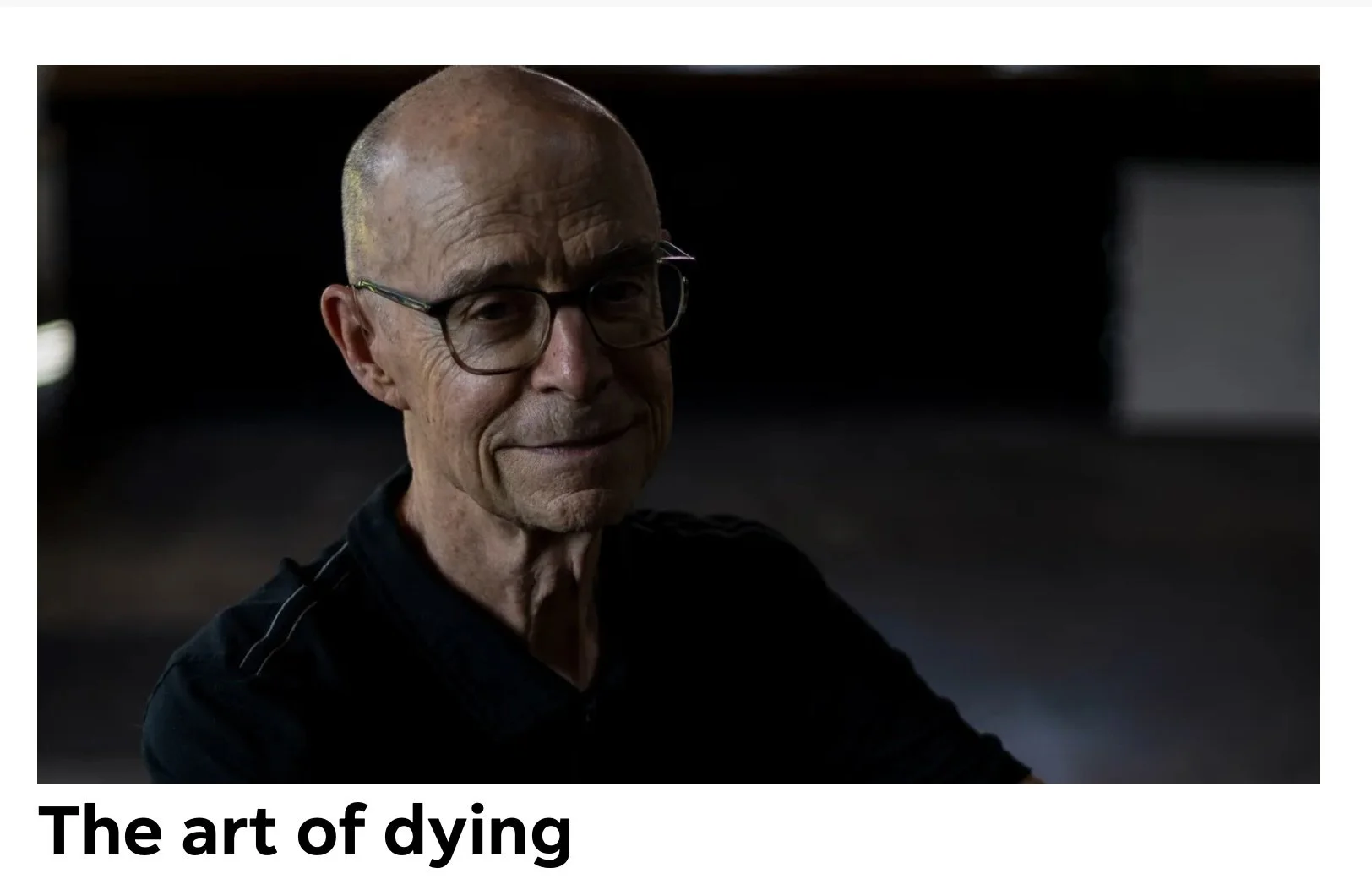
Dying of cancer, former Flynn director, legislator and artist John Killacky contemplates a life, and death, through one last piece.
John Killacky placed the fragile plaster casts inside the old upright apple crate. They were casts of his legs, legs that had failed him these last three decades since a surgical mishap left him temporarily quadriplegic.
This would be his newest art project. But as he looked at those legs in the crate - the box, he calls it - he hit a wall. It wasn't sitting right. He stuffed it away in his attic, and spring turned to summer.
Then he had a revelation, one driven by a newer, more dire health crisis he was finally ready to confront.
He hauled out the box and looked at it. "Oh, it's too pretty," he told himself, too pretty for the chaos he'd lived this year.
So, he started scratching it up.
***
When he debuted the box during September's South End Art Hop, the chaos was clear. The box still held the casts, but now doctors' images of his prostate hung in a strip between them. On top of the box were photos he took while being slid into a medical scanning machine and injected with radioactive material, and near those was a hospital wristband bearing his name and date of birth.
A sign on one side read "Caution - hazardous drug." The other side displayed the words "No longer talking about a cure." Plaster-slathered pill bottles flanked the box on its podium like wayward bone fragments. Killacky's stoic face, in a black and white print, peered out from the crate.
The work, "Metastases," told the latest story of Killacky's body, a body now wracked with untreatable disease. The piece will likely be the last Killacky makes before he dies of cancer.
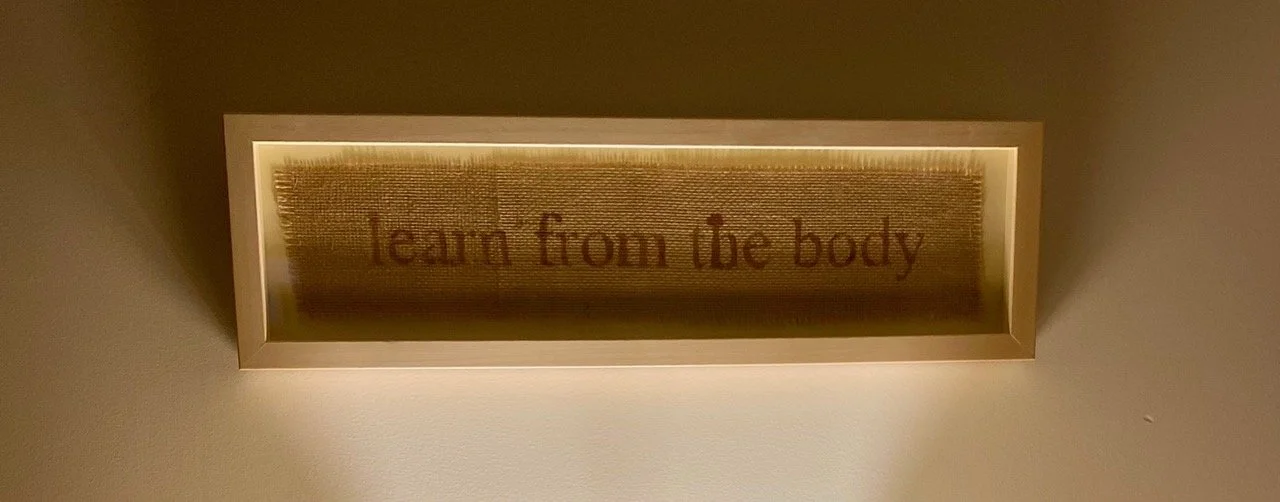
The retired arts administrator, best known in Vermont as executive director of the Flynn, has been making his own art for years. It focuses on matters of life that words seem too small to describe, on the body in peril - whether from AIDS, paralysis or the prospect of death. His pieces have long lived behind the scenes.
With the box, he's bringing his demise out in the open.
At Art Hop, as Killacky presented another of his projects, friends streamed by to see him and say farewell. He greeted them with good cheer. Sometimes he stood, sometimes he sat on the walker he uses instead of the cane he relied on for decades.
On this one festive night in Burlington, he had three works on display. His visual-art career never seemed more robust.
"It was beautiful," he'd tell the Free Press the next day. "It was my grand finale."
***
Killacky's artistry has mostly been overshadowed by his duties as an arts administrator, which before coming to Burlington in 2010 to lead the Flynn included work at the Walker Art Center in Minneapolis and the San Francisco Foundation. It was in Minneapolis where Killacky, who pursued dance in his younger days in Chicago and New York, returned to his creative pursuits.
"In the '90s I started making videos about AIDS," he said. "It was a very, very terrible time. I had moved from New York, I was living in Minneapolis, I was at the Walker Art Center, and my whole community of gay men were dying."
"Part of what was really important to me was to mourn and eulogize, but (also) how to find a way to make the body sacred again. I felt like the gay male body in my community was so demonized, people were terrified of it, that I wanted to do something with the body."·
His own body failed him in 1996. During surgery to remove a benign tumor from his spinal cord, Killacky became paralyzed from the neck down. It took three months to learn to walk again. He has Brown-Sequard syndrome, leaving him without sensationon the right side of his body. He can feel on his left side, but his brain doesn't know where his left leg is.
Killacky began making videos about disability soon after. One piece, "Dreaming Awake," featured "beautiful dancers with disabilities, all naked," as he described it. The dancers set aside their canes, wheelchairs and leg supports - the objects often seen before the people who use them.
"Pretty much since the '90s I have made work about the body, my personal body," he said. "I've always excavated my own experiences in my art making."
His struggle to understand informs other people's struggles, and he's glad they can relate.
"You make these bizarre little works and people go, 'Who is it for?' and I say, 'I don't know, it's for me,"' he said. "I make them out of an urgency."
That urgency stems from a need to process what's happening in his world.
"What I found about a lot of my video work is, the more myopic it becomes, the more universal it becomes."
***
Killacky left the Flynn in 2018 and the next year began the first of two terms in the Vermont House, representing his city of South Burlington. His art stayed mostly under the radar, though he published a book of essays and interviews, "because art," in 2021.
It wasn't until he left politics at the end of 2022 that he could focus more on artmaking. "The world really opened up beautifully," he recalled. "I was grateful."
Following President Trump's election win in 2024, Killacky asked friends if he and creative partner Art Bell could film a body part "they felt was threatened in the current environment." The next year, he contributed to an exhibition about grief at Burlington City Arts' Church Street center: a piece called "Corpus," which incorporated film, a burial shroud and burlap.
The footage he and Bell captured ended up in one of this fall's Art Hop projects, displayed at the Media Factory. Over at BCA Studios, another Art Hop effort, "Interstitial Yoko Dreams," juxtaposed videos made by Killacky and other Vermont filmmakers with DJ Craig Mitchell's hit club remixes of Yoko Ono songs.
Many of Killacky's projects over the years have been collaborative, reflecting his time leading arts groups and bringing others' work to wider audiences.
"They become co-creations," he said. "And they're all about community for me, and the body."
***
Killacky's body rebelled again last November.
"Something's wrong," he told his doctor. "I've been urinating all the time and I have to get up all the time."
A scan indicated a kidney stone. But in January, his prostate-specific antigen levels were high.
A urologist told him he had good and bad options. "OK, what's the good option?" Killacky asked.
"Well, with levels this high you probably have tumors in your prostate," the urologist said, "and so the good option would be that we can take the prostate out."
"So, what's the bad option?" Killacky asked.
"Well, if it has spread to other parts of your body," the urologist said, "we're no longer talking about a cure."
Doctors ordered a PET scan that sent radiation coursing through him. At an oncologist's office, he watched as the telltale white imagery of the scan revealed cancer had spread from his prostate to his pelvis, femur, rib cage, spine and liver.
He heard the oncologist relay the same message as the urologist: "We're no longer talking about a cure."
Doctors told him chemotherapy might give him a few months more of life. Killacky turned it down. He chose quality of life over quantity. But he started some prescriptions to keep the cancer contained and stop it from mutating so quickly.
"It made me really sick," Killacky recalled. "My brain was foggy, and I was tired all the time and nauseous all the time."
As summer rolled by, he decided to stop the meds.
Freed from drug-induced brain fog, he picked up the box that had stymied him a couple of months earlier and saw the path forward. He brought it into the garage, smeared paint against it with a scraper. It wouldn't be so pretty.
"I guess I didn't know how to be public about living with a terminal diagnosis," he'd say later, "except through my art."
The scan images and pill bottles he'd accumulated over these last few months would become "Metastases."
"It's not about the legs anymore," he realized. "It's about this journey I'm on. Cancer in the box, what does that mean?"
The well-worn crate echoed the body, fragile and fraught.
As he looked at it, he saw "the container of all this, and the grief and the shock and the terror of it all."
***
As he and his husband, Larry Connolly, reeled from that shock and grief, it grew difficult for Killacky to process other people's reactions.
Everyone wanted to see him. But every time they did, they wanted to cry. It grew too hard.
"Don't come over, don't console me," he told loved ones who wanted to visit. "It's OK."
He started going through his belongings, weighing what was important to him but not to his husband, not wanting to overburden the man he'd shared 31 years with. He tossed three drawers' worth of work: every piece of writing, every lecture, every presentation given around the world these past three decades.
"I loved them," he said recently. "It was important to me what I did in Buenos Aires or wherever it was that I was teaching. But then it's like, it doesn't have any meaning anymore."
He threw out seven garbage bags of VHS tapes of his video work from the 'gos. He decided he'd let the subscriptions for his websites expire - and let the sites, and all the videos and artwork on them, vanish.
***
Killacky feels intense bouts of tiredness. He's often nauseous. The pain in his legs borders on extreme. Now 74, he speaks of his remaining time in weeks, not months, not years.
He's sanguine about it.
"The one thing I notice now is that when I look at obituaries, I look to see what age the person is," he said, laughing heartily at the thought of reading about people living longer than he will. "I'm a little envious, OK?"
Killacky never thinks he got a raw deal with his health, starting with that temporary paralysis in the '90s.
"It was very traumatic," he said, "but it also gave me gifts, perspectives on things. It gave me different communities that I was part of."
So did his terminal diagnosis.
"I think the gift of facing your own death here is this freedom of - 'What's important? What is this stuff that we carry with us? What value does this have?"' he said.
He continues to find joy. He's loved ponies since childhood. His 19-year-old Shetland pony, Raindrop, lives in a barn in Williston. Killacky used to ride in a cart behind Raindrop, the free-flowing movement bringing him back to when he could run and dance with ease.
His legs are no longer strong enough for those rides. Now he goes to the barn simply to groom Raindrop.
"This morning I brought her an apple," Killacky said. "As soon as I get out of the car, she whinnies for me because she can smell me coming."
He'll sit in a chair next to her, nap. She'll cock her head over to visit with him, and he visits with her.
"I have this love," Killacky said. "I have love at home that's profound, and I have this creature, my pony."
He has just one worry about his time being short.
"The only thing I'll miss is Larry," he said, his voice wavering. "That is the hardest part for me. I don't want to be a burden to him. I think that's why as I get weaker, that's my one concern: 'How do I not be a burden to him?"'
Otherwise, Killacky has found acceptance. He feels blessed by his career, his community. "Professionally I've had a lot of recognition," he said, "artistically I've gotten a lot of recognition."
"So, it's like: 'OK, we're good."'
The Magpie Chronicles: What the Body Knows
https://msebastianaraujo.substack.com/p/what-the-body-knows?r=1i5bd6&utm_campaign=post-expanded-share&utm_medium=web&utm_id=97758_v0_s00_e232_tv4_tp1_a1demontp68rer&fbclid=IwY2xjawRylWVleHRuA2FlbQIxMABicmlkETFENEc0djQxaEJPWG5vUG1Rc3J0YwZhcHBfaWQQMjIyMDM5MTc4ODIwMDg5MgABHnkXYZJZqX6GbNlyC2obKHAl142iOcxdO13ZBwivhVXwFnNkSUyBNizqvFYL_aem_ifVu_BfA_up1JuwAiNnfew&triedRedirect=true
Core Dance: Artist talk with John Killacky
https://vimeo.com/1110163614?ref=watch_history#t=13
All Things LGBTQ
https://www.youtube.com/watch?v=MUDFy-GZBGE
Moments with Melinda
https://www.youtube.com/watch?v=6GUcAeWo_EI
Seven Days: Mourning in America: BCA Center Arts Show Explores Private and Public Grief
https://www.sevendaysvt.com/arts-culture/artreview/mourning-in-america-bca-center-art-show-explores-private-and-public-grief/
Burlington City Arts: “Do We Say Goodbye? A Conversation”
https://www.youtube.com/watch?v=5LhEUYMytBo
WDEV Vermont Viewpoint: Host Brad Ferland speaks with John Killacky
https://blubrry.com/vermontviewpoint/148673944/september-22-2025-host-brad-ferland-talks-with-artist-john-killacky-and-western-music-artist-dave-stamey-and-local-musician-jess-obrien/?fbclid=IwY2xjawM-gxhleHRuA2FlbQIxMQABHhoTcwN74bQXh23S8H0gHxizI4At4fz_ht5nPFJF-gL_LwBmgRW6lMxgRzlN_aem_zYjk_rg1RF6V8b4_eRE-NA
University of VT Health Network: Redefining Pain: A New Model for Care
https://living-healthy-together.cohostpodcasting.com/episodes
This Is Actually Happening Podcast: What if you woke up and couldn’t move?
https://www.thisisactuallyhappening.com/podcast/episode/25a965b0/what-if-you-woke-up-and-couldnt-move-rebroadcast-242
Fabric Workshop and Museum: John Killacky in Conversation with Megan Voeller
https://www.youtube.com/watch?app=desktop&v=km8GMNTk-iU
Artist-in-Residence: The Fabric Workshop and Museum
https://fabricworkshopandmuseum.org/artist/john-killacky/
Seven Days: At Champlain College, John Killacky Revisits and Art Movement with FluxFest
https://www.sevendaysvt.com/vermont/at-champlain-college-john-killacky-revisits-an-art-movement-with-fluxfest/Content?oid=39282087
Vermont Public: New video exhibit by former Vermont lawmaker offers meditations on grief and art-making
https://www.vermontpublic.org/local-news/2023-02-10/intermedia-art-videos-created-by-former-vermont-legislator-john-killacky-are-on-display-jam-white-river-junction
Transqat Episode 15: John Killacky
http://transqat.com/podcast/
Times Argus & Rutland Herald: World AIDS Day: Remembering with John R. Killacky’s ‘AIDS Trilogy’
https://www.timesargus.com/features/vermont_arts/world-aids-day-remembering-with-john-r-killacky-s-aids-trilogy/article_57241db3-1c45-59c9-90ba-69cf1fc1a2ab.html
OUTWORDS: John Killacky
https://theoutwordsarchive.org/interview/john-killacky/?fbclid=IwAR0vcnM1YhSSLw5Yt3fcxbk8eGqt6BT-bM0wh1mIEDBel860pBj6-6OG0cM
KFAI/MinneCulture: Perseverance, Reilience, and Inspiration: A conversation with John R. Killacky
https://www.kfai.org/minneculture-perseverance-resilience-and-inspiration-a-conversation-with-john-r-killacky/?fbclid=IwAR2gUbHzNNdIPv4VIwrwkb7gQF6BU4DfA-ZbxBuYd5HEobNJYbIa_aBxQMc
Vermont Made/Vermont Arts Council: Called to Serve the Arts with John Killacky
https://www.vermontartscouncil.org/blog/vermont-made-john-killacky/
Vermont Conservations: John Killacky on culture wars and the night Trump came to Vermont
https://vtdigger.org/2021/09/19/vermont-conversation-john-killacky-on-culture-wars-and-the-night-trump-came-to-vermont/
Vermont Humanities: Culture Wars with Dona Ann McAdams and John Killacky
https://www.youtube.com/watch?v=Mg1LOsE0MAI
Amy Beecher podcast: In the Bardo with John Killacky
https://amybeecher.show/Episode-50-John-Killacky
The Sunday Gent podcast: John Killacky surveys his influential career
https://www.listennotes.com/podcasts/the-sunday-gent/john-killacky-o0c_9Sq576I/
VTDigger: DJ Hellerman On John Killacky’s ‘Embodied Voice: Video Narratives’
https://vtdigger.org/2018/02/12/%C2%ADdj-hellerman-john-killackys-embodied-voice-video-narratives/
VPR interview with Mitch Wertlieb
http://digital.vpr.net/post/departing-executive-director-flynn-center-seeks-new-stage-vermont-politics#stream/0
Seven Days article by Pamela Polston
https://www.sevendaysvt.com/vermont/exiting-the-flynn-center-john-killacky-looks-to-the-future/Content?oid=17394795
Seven Days: Stuck in Vermont video feature:
https://www.sevendaysvt.com/vermont/driving-mr-killacky-373/Content?oid=2460720
Holding On (2006) features three couples coping with the resultant physiological, cognitive, emotional, sexual, and social issues of disability. Filmmaker John Killacky was partially paralyzed from unexpected complications from surgery. Other featured artists with include cellist Joan Jeanrenaud and painter Katherine Sherwood.